Is SEO Worth It for a Small Business? Costs, Timelines and SEO vs Google Ads
Is SEO worth it for a small business? Often yes, sometimes no, and the honest answer depends on three things: whether people search for what you sell, what a new customer is worth to you, and whether you can wait a few months for results. This guide gives you the costs, the timelines and a straight comparison with Google Ads so you can decide for yourself.
The short version
- SEO is worth it when customers search for what you do and one new customer is worth much more than a month of SEO.
- It’s slow to start. Plan in months, not weeks.
- It compounds. A page that ranks keeps bringing visits without a fee per click.
- Ads are the opposite: instant, and gone the day you stop paying.
- Most businesses do best with both: ads for work now, SEO so you need fewer ads later.
What you’re actually buying
SEO, or search engine optimisation, is the work of getting your website to appear when people search Google for what you sell. For a local business that usually means four things: a site that’s fast and technically sound, a page for each service and area you cover, a complete Google Business Profile with reviews, and other reputable sites linking to yours.
Good SEO is mostly unglamorous work done consistently. If an agency can’t tell you in plain words what they did last month, that’s a warning sign. See how to tell if your agency’s report is real.
What SEO costs in Australia
Prices vary widely because “SEO” covers everything from a few hours of local clean-up to a full content and link-building programme. As a guide, a small local business will usually be quoted somewhere between a few hundred dollars and a few thousand dollars a month. More competitive industries and bigger cities sit at the higher end.
For reference, our own SEO plans start at $349 a month + GST and the prices are published. Whoever you use, ask what’s included each month, who owns the accounts, and whether you’re locked in. Our guide to choosing an SEO company has ten questions to ask.
How long SEO takes
There’s no fixed timeline, and anyone who guarantees one is guessing. As a rule of thumb, expect the first few months to go on fixing the site and building pages, with early movement on low-competition local searches. Competitive searches take longer, sometimes a year or more.
Three things decide how fast it goes: how strong your competitors are, what state your site starts in, and how much real work gets done each month. A brand-new website in a crowded market will take longer than an established local business that has simply never been optimised.
SEO vs Google Ads
They aren’t rivals. They solve different problems on different timelines.
| SEO | Google Ads | |
|---|---|---|
| Speed | Months to build | Days to switch on |
| Cost | Monthly fee or your own time, no fee per click | You pay for every click |
| When you stop | Rankings usually hold for a while, then slowly fade | Traffic stops immediately |
| Best for | Steady, long-term enquiries | Urgent jobs, launches, testing demand |
| Main risk | Paying for months of vague work | Paying for clicks a weak website wastes |
Click prices show why ranking matters. These are average costs per click for a few Australian searches:
Average cost per click, Australia (AUD)
Semrush estimates, Australian database, November 2026. Real costs vary by suburb, time and competition.
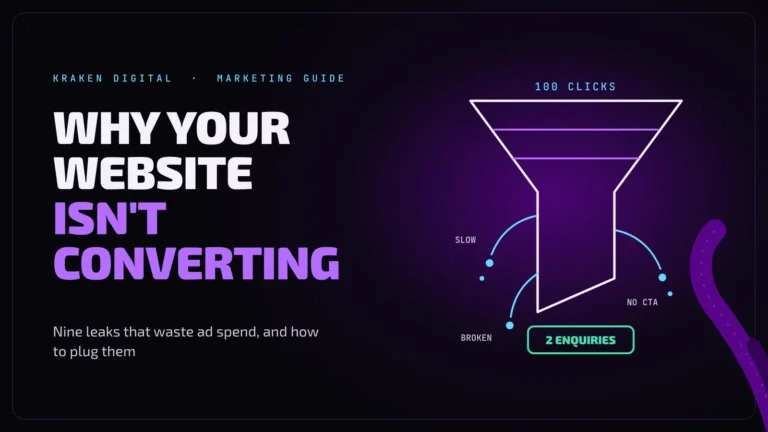
At A$19 a click, 100 visits from ads costs about A$1,900, every month. If the same page ranked near the top of Google, those visits would cost nothing per click. That’s the case for SEO in one line. The case for ads is that they work this week. Whichever you choose, the website has to convert, or you’re paying for visits that leave. Read why your website isn’t converting and test your numbers in the ROAS calculator.
Is AI killing SEO?
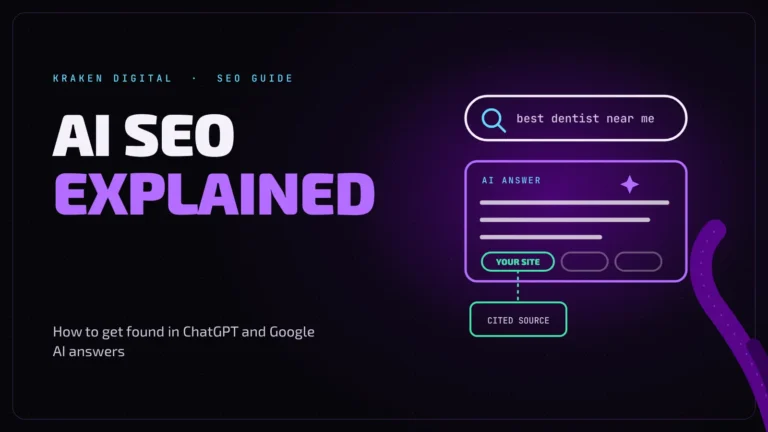
No, but it is changing what SEO is for. Google now answers many simple questions with an AI summary at the top of the page, and more people ask assistants like ChatGPT instead of searching. For “what is” and “how do I” questions, that means fewer clicks through to websites.
Searches where someone wants to hire or buy are different. A person looking for a dentist, a plumber or an accountant near them still needs a real business, and Google still shows a map, reviews and websites for those searches. That is where most small business SEO was always aimed.
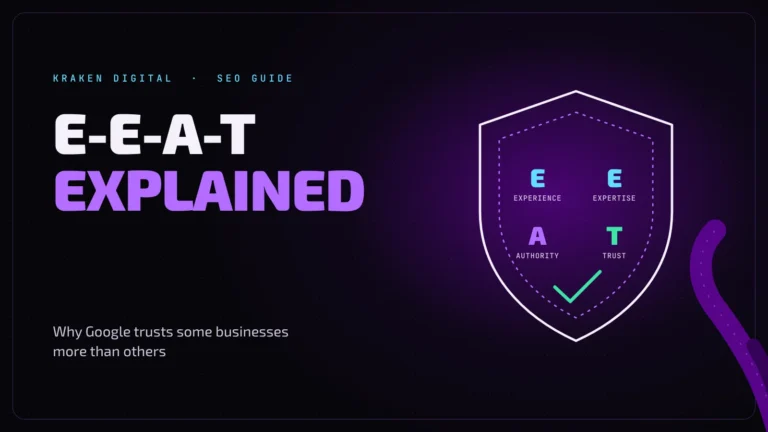
AI tools also have to get their answers from somewhere. They draw on websites, reviews and business listings, so a business with clear service pages, consistent details and good reviews is easier for an assistant to recommend. The work is the same work: be findable, be specific and be trustworthy. Our guide to E-E-A-T covers the trust side.
What has changed is which content is worth paying for. Thin articles written only to catch general questions are worth less than they were. Pages that show what you do, where, for how much and with what proof are worth more. For the practical steps, read our guide to AI SEO.
When SEO isn’t worth it
- Nobody searches for it. A brand-new kind of product has no search demand to capture yet. You need to create demand first, with ads, social media or outreach.
- You need work this week. SEO won’t fill next week’s diary. Ads or direct outreach will.
- A customer isn’t worth much. If the profit from a new customer is tiny and they never come back, the numbers may not stack up.
- You can’t take on more work. Fix capacity first.
- The website can’t convert. Ranking a site that loses visitors just sends more people to a dead end. Fix the site first.
How to tell if it’s working
Ask for three things each month: where you rank for the searches that matter, how many visits came from Google search, and how many calls or enquiries those visits produced. Rankings and traffic are early signs. Enquiries are the result. If you’re shown only impressions, “visibility” or a long list of tasks with no outcomes, ask harder questions.
Sonar check · before you sign up for SEO
- Do people search for what you sell in your area? Ask to see the search volumes.
- What is one new customer worth to you in profit?
- Can you fund it for at least six months?
- Is the website fast, clear and able to convert?
- Will you own your website, Google accounts and data?
- Is the contract month to month, or are you locked in?
Free · no obligation
Not sure if SEO would pay off for you?
We’ll check your site, your competitors and the real search demand in your area, and tell you honestly whether it’s worth it.
Is SEO worth it: FAQs
Is SEO worth it for a small business?
Usually, if people search Google for what you sell and a new customer is worth much more than the monthly cost. It’s less suitable if you need work immediately, sell something nobody searches for yet, or have a website that can’t turn visitors into enquiries.
How long does SEO take to work?
There’s no fixed timeline. As a rule of thumb, expect a few months before you see early movement on low-competition local searches, and longer for competitive ones. It depends on your competition, the state of your site and how much work is done each month.
How much does SEO cost in Australia?
It varies widely. Small local businesses are usually quoted from a few hundred to a few thousand dollars a month, depending on competition and how much work is included. Ask exactly what you get each month before comparing prices.
Is SEO better than Google Ads?
They do different jobs. Google Ads brings visits within days but stops when you stop paying. SEO takes months but keeps bringing visits without a fee per click. Many businesses use ads first and build SEO alongside.
Is AI killing SEO?
No. AI summaries are reducing clicks for simple information questions, but searches where people want to hire or buy still show local businesses, maps and reviews. AI assistants also rely on websites, reviews and listings for their answers, so clear, trustworthy pages still matter.
Can I do SEO myself?
Yes, especially the basics: complete your Google Business Profile, ask for reviews, and make sure each service has its own clear page. Technical fixes, content at scale and link building take more time and skill, which is where an agency helps.
Sources
Checked November 2026. Rules and prices change, so confirm details with the source before you act.
More from the small business marketing guide
This article is one stop in our small business marketing guide. Keep going:
- FoundationsWhy your website isn’t converting
- FoundationsWebsite trust checklist (free tool)
- Get foundE-E-A-T explained
- Get foundGoogle Business Profile setup
- Paid trafficROAS calculator (free tool)
- Check the workHow to tell if your agency’s report is real
- Check the workWho owns your marketing accounts?
// keep diving