E-E-A-T Explained: Why Google Trusts Some Businesses More Than Others
E-E-A-T stands for experience, expertise, authoritativeness and trustworthiness. It’s the framework Google uses to describe what makes a page, and the business behind it, worth believing. You don’t need to remember the acronym. You do need to understand the idea, because it explains why Google and customers trust some businesses more than others, and what you can do about it.
The short version
- E-E-A-T is a way of judging trust, not a score you can look up or a box you can tick.
- Trust is the part that matters most. The other three exist to support it.
- It matters more in health, money, legal and care, where bad information can hurt someone.
- You show it with evidence: real people, real work, real reviews, real business details.
- The same things that reassure Google reassure customers, so the work pays off twice.
What E-E-A-T stands for
E
Experience
Have you actually done the thing you’re writing about? Photos of your own jobs and first-hand detail show it.
E
Expertise
Do you have the knowledge or qualifications? Licences, registrations and training show it.
A
Authoritativeness
Do others recognise you? Reviews, mentions and links from respected sites show it.
T
Trustworthiness
Is the business honest, accurate and safe to deal with? Clear details, policies and a secure site show it.
Google added the first E, for experience, in December 2022. The point was to recognise that someone who has done the work, used the product or lived the situation often has something more useful to say than someone summarising from a distance.
Is E-E-A-T a ranking factor?
Not directly. Google says E-E-A-T is not itself a specific ranking factor. There is no E-E-A-T score in your Search Console. What Google does say is that its systems look for a mix of signals that help identify content showing good E-E-A-T, and that trust is the most important of the four.
In practice that means you can’t “add E-E-A-T” with a plugin or a paragraph. You earn it by making it easy to verify that a real, qualified, well-regarded business stands behind the page.
Who needs to care most
Google gives extra weight to E-E-A-T for what it calls “Your Money or Your Life” topics: subjects that could affect someone’s health, finances, safety or wellbeing. If you’re a dentist, physio, psychologist, pharmacist, NDIS or aged care provider, lawyer, accountant, mortgage broker or financial adviser, this is you.
It still matters for everyone else. A homeowner choosing an electrician or a builder is making a safety and money decision too, and they check the same things: is this business real, licensed and well reviewed?
What it looks like on a small business website
| Signal | Weak | Strong |
|---|---|---|
| Experience | Stock photos and generic claims | Photos of your own jobs, case studies, specifics only someone who does the work would know |
| Expertise | “Our expert team” | Named people with qualifications, licence or registration numbers, years in the field |
| Authority | No reviews, no mentions anywhere | Google reviews with replies, industry memberships, links from local and industry sites |
| Trust | A contact form and nothing else | Business name, ABN, phone, service area, clear pricing or process, privacy policy, secure site |
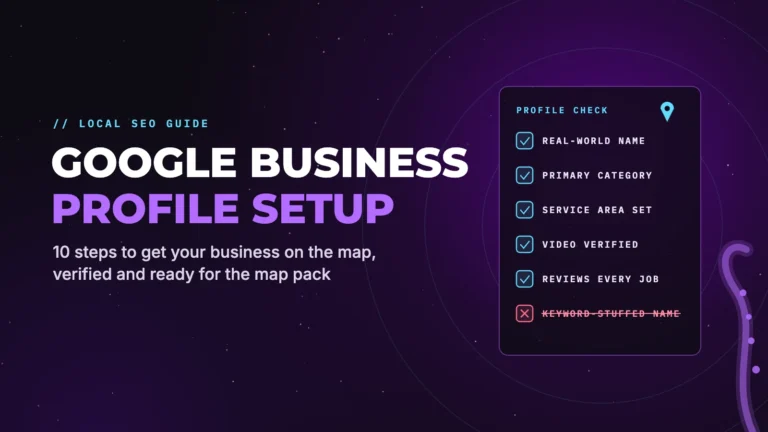
A few of these do double duty. Google lists relevance, distance and prominence as the three things that decide local rankings, and says more reviews and positive ratings can help. So asking every happy customer for a review, and replying to each one, builds trust with people and with Google at once. Our Google Business Profile setup guide covers how.
Sonar check · 10 minutes on your own site
- Can a stranger see who runs the business, with a name and a face?
- Are licences, registrations or qualifications shown where they apply?
- Are there photos of real work, not stock images?
- Are reviews visible on the site, not just on Google?
- Are your ABN, phone number and service area easy to find?
- Do articles and advice pages show who wrote them and when?
Want a score and a to-do list? Use the free website trust checklist.
Who, how and why
Google suggests asking three questions about any piece of content. Who created it: is it clear who wrote the page, and why they’re qualified to? How was it made: from real experience and checking, or churned out? Why does it exist: to help the reader, or only to catch search traffic?
For a service business the honest answers are usually good ones. You wrote it because customers keep asking the question, and you know the answer because you do the work. Say so on the page.
What not to do
- Don’t buy or invent reviews. Fake reviews can breach Australian Consumer Law, and they’re easier to spot than people think.
- Don’t invent authors or credentials. A made-up “Dr” or a stock-photo team damages trust the moment someone checks.
- Don’t publish filler. Pages written only to hit a keyword, with nothing you actually know in them, are exactly what Google’s guidance warns against.
- Don’t hide the basics. No phone number, no address or service area and no named person reads as “something to hide”.
Free tool · 2 minutes
How trustworthy does your website look?
Tick off what your site already shows and get a trust score with a plain-English fix list.
E-E-A-T: FAQs
What does E-E-A-T stand for?
Experience, expertise, authoritativeness and trustworthiness. It’s the framework Google uses to describe content, and the people behind it, that can be relied on.
Is E-E-A-T a Google ranking factor?
Not directly. Google says E-E-A-T is not itself a specific ranking factor, but its systems look for signals that help identify content showing good E-E-A-T, and it treats trust as the most important part.
How do I improve E-E-A-T on my website?
Show evidence. Name the people behind the business, list qualifications and licences, publish photos and case studies of real work, collect and reply to reviews, display your ABN and contact details, and keep information accurate and dated.
Does E-E-A-T matter for local businesses?
Yes. Customers choosing a local business look for the same trust signals Google does, and reviews also help local rankings. It matters most for health, legal, financial and care businesses.
What is YMYL?
“Your Money or Your Life”. It’s Google’s term for topics that could affect a person’s health, finances, safety or wellbeing. Google gives more weight to E-E-A-T for these topics.
Sources
- Google Search Central: Creating helpful, reliable, people-first content
- Google Business Profile Help: Tips to improve your local ranking on Google
Checked November 2026. Rules and prices change, so confirm details with the source before you act.
More from the small business marketing guide
This article is one stop in our small business marketing guide. Keep going:
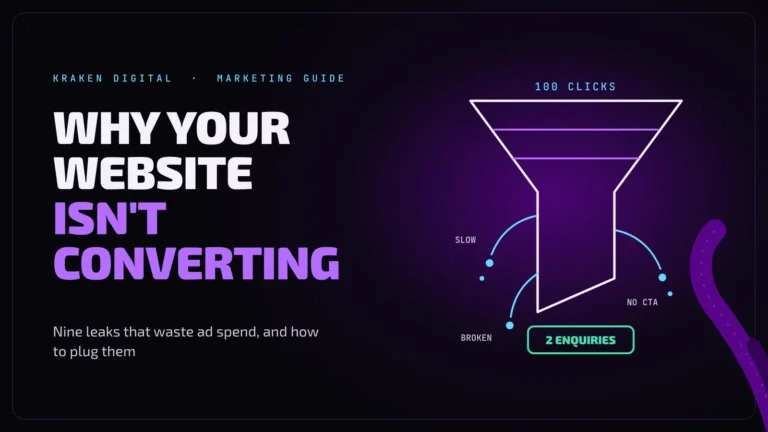
- FoundationsWhy your website isn’t converting
- FoundationsWebsite trust checklist (free tool)
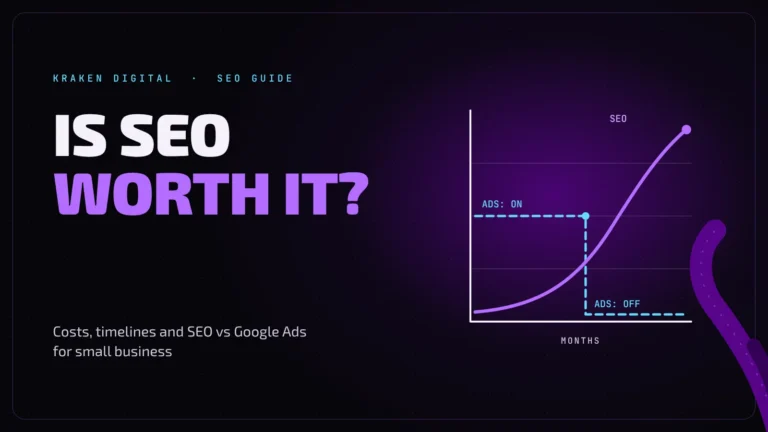
- Get foundIs SEO worth it?
- Get foundGoogle Business Profile setup
- Paid trafficROAS calculator (free tool)
- Check the workHow to tell if your agency’s report is real
- Check the workWho owns your marketing accounts?
// keep diving