Everything a new disability support provider needs, in the order you need it: setting up and registering, branding without breaking NDIA rules, getting found on Google, and winning participants through referrals.
Answer four quick questions and we'll point you to the stage, and the guides, that matter most right now.
Do you have an ABN, and know exactly which supports you'll offer and where?
Have you decided whether to register with the NDIS Commission (and applied, if you're registering)?
Do you have your own name and logo, and a website with a page for each support?
Are new participants reaching you every month, from referrals or Google?
Depth reading
Answer to get a reading
Your result appears here as you go. Nothing is saved or sent anywhere.
The route
Four stages from idea to steady referrals
Starting an NDIS business is mostly about getting things in the right order. Registration doesn’t bring participants, and marketing can’t fix a model that doesn’t pay. Work down through the stages below. Each one links to a detailed guide.
1
Stage 1 · Surface · 0 m
Set up and register
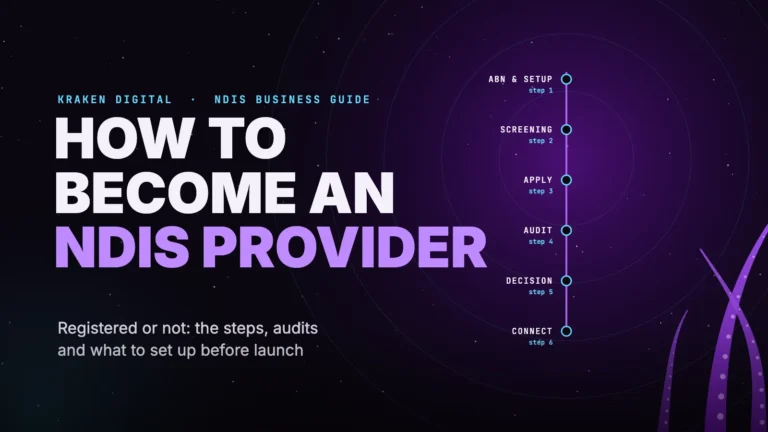
Start with the basics: an ABN, a business structure, the supports you’ll offer and the area you’ll cover. Then decide whether to register with the NDIS Quality and Safeguards Commission. Registration lets you support every participant, including NDIA-managed ones, and is required for some supports such as supported independent living from 1 July 2026. Many providers start unregistered and support self-managed and plan-managed participants.
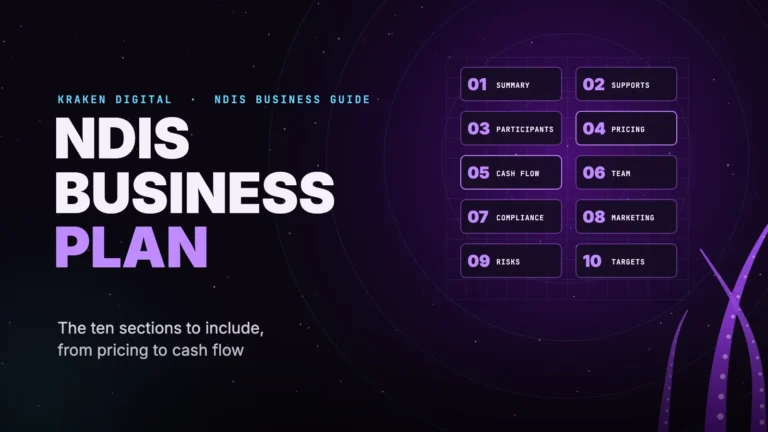
Before you spend money, write a business plan that works out your real cost per hour against the NDIS price limits and how you’ll cover wages before claims are paid.
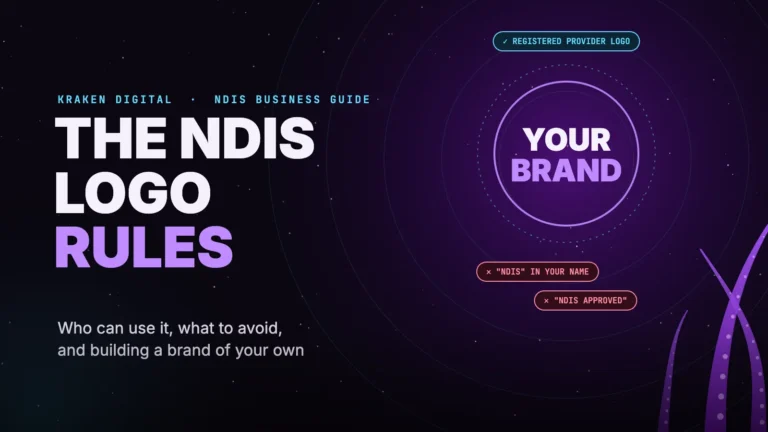
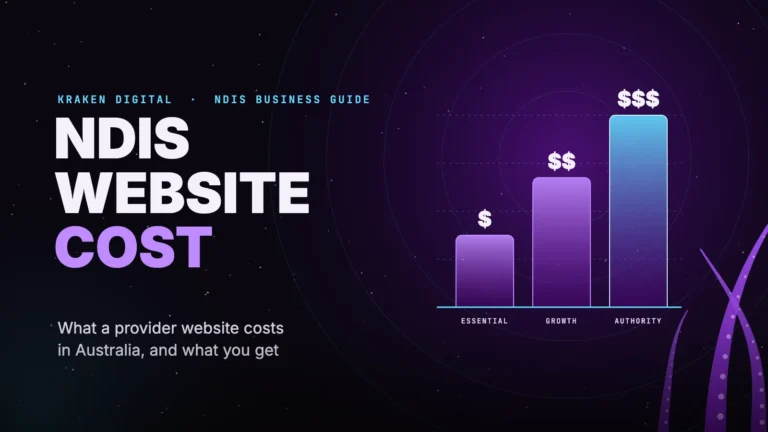
Participants, families and support coordinators will look you up before they call. Your name and logo need to stand on their own (the NDIA treats “NDIS” in a business or domain name as misleading), and your website needs to be accessible, plain-English and clear about who you support and where.
New participants mostly come through two routes: referrals from support coordinators, plan managers, local area coordinators and allied health professionals, and searches on Google and Maps. Referrers want a clear summary of what you do, honest capacity updates and a same-day reply. Families searching online want to see you near them, with real people and plain language.
Every provider must follow the NDIS Code of Conduct, and registered providers are audited against the NDIS Practice Standards and must renew their registration. Keep your website and ads inside the NDIA’s advertising rules: no “NDIS approved”, no “100% NDIS funded”, and only registered providers can call themselves registered.
Once the basics are steady, growth comes from more of what works: new service areas, new supports and a stronger presence on Google.
Tick things off as you go. Your progress stays in this browser only, so you can come back to it.
0 of 17 done
Proof from the deep
What this route did for our own NDIS business
Kraken Digital shares an owner with Good Company Disability Services, an NDIS provider in Victoria and Western Australia. We built its website, and since April 2026 its SEO has been run in-house by the same owner-operator, with no outside agency. The lift below came from new content we published after April, months before the site was rebuilt in October 2026. Here’s what Semrush shows.
167On page oneTop-10 Google rankings, up from 103 in April 2026
43In the top 3Up from 27 in April 2026
753Keywords rankingUp from 716 in April 2026
2,804Monthly visitsEstimated organic traffic, holding near its April level without an agency retainer
Rankings since SEO came in-house
Page-one rankings (top 10)
Apr 26103
Nov 26167
Top-3 rankings
Apr 2627
Nov 2643
All ranking keywords
Apr 26716
Nov 26753
+62% page-one rankings and +59% top-3 rankings since April. Most of the lift landed within five months: page-one rankings reached 170 by September 2026.
Where Good Company ranks on Google
#1disability service providers melbourne720 / mo
#2disability services melbourne880 / mo
#3disability support services melbourne1.6K / mo
#2disability support worker agencies melbourne480 / mo
#3melbourne disability services480 / mo
#2melbourne disability support services210 / mo
#2disability service provider melbourne170 / mo
#3disability care melbourne140 / mo
#5ndis service provider melbourne880 / mo
#1disability support companies390 / mo
#2disability companies320 / mo
#3ndis services perth480 / mo
#3ndis support workers near me480 / mo
#3disability companies near me390 / mo
#2disability support joondalup110 / mo
#10ndis providers perth1K / mo
#2ndis meaning6.6K / mo
#1ndis employment support1K / mo
#7ndis price guide 20265.4K / mo
#1assistance with self care activities260 / mo
#3ndis self management260 / mo
#3ndis business plan example90 / mo
Source: Semrush, Australian database, organic rankings for goodcompanyds.com.au, November 2026 compared with April 2026. Traffic figures are Semrush estimates (3,021 visits a month in April 2026, 2,804 in November 2026). Rankings move daily.
Questions
Starting an NDIS business: FAQs
How do I start an NDIS business?
Get an ABN and choose a business structure, decide which supports you’ll offer and where, write a business plan with pricing under the NDIS price limits, and decide whether to register with the NDIS Commission. Then build your brand, website and referral relationships so participants can find you.
Do I need to be registered to start an NDIS business?
Not always. Unregistered providers can support self-managed and plan-managed participants for most supports. You need to be registered to support NDIA-managed participants and for some supports, including supported independent living and NDIS digital platforms from 1 July 2026.
How much does it cost to start an NDIS business?
There is no fee to register with the NDIS Commission, but registered providers pay an approved quality auditor. Budget too for insurance, software, worker screening, your brand and website, and enough cash to cover wages before claims are paid.
How long does it take to get NDIS clients?
Referrals from support coordinators and plan managers can start within weeks once you are known locally. Ranking on Google usually takes several months, so start your website and Google Business Profile early.
Can I use NDIS in my business name?
The NDIA lists the NDIS acronym in business, trading or domain names as an example of misleading affiliation. Choose a name that stands on its own.