How to Become an NDIS Provider: Registered or Not (2026 Guide)
Thinking about starting a disability support business? The first big question is how to become an NDIS provider, and whether you need to be registered at all. This guide walks through both paths, the official registration steps with the NDIS Quality and Safeguards Commission, what the audit involves, and what to sort out before your first participant finds you online.
We write this from the inside: Kraken Digital shares an owner with Good Company Disability Services, an NDIS provider working across Victoria and Western Australia. So we have been through this process, not just read about it.
The short version
- You need an ABN and the ability to show you can deliver the supports you plan to offer.
- Registration is optional for many supports, but required to work with NDIA-managed participants and for some supports, including supported independent living (SIL) from 1 July 2026.
- Registered providers apply through the NDIS Commission, pass an audit by an approved quality auditor and a suitability assessment, then connect to the NDIA’s systems.
- There is no fee to register, but you pay the auditor. Get more than one quote.
- Plan your brand and website early. Strict rules apply to how you use the NDIS name and logo.
Registered or unregistered: which path is yours?
You can deliver many NDIS supports without registering. The catch is who you can work with. Participants whose plans are NDIA-managed (the agency pays providers directly) can only use registered providers. Self-managed and plan-managed participants can generally choose unregistered providers for most supports.
Some supports always need registration. According to the NDIS Commission, from 1 July 2026 providers of supported independent living (SIL) and NDIS digital platforms must be registered. Registration is also needed for areas like behaviour support and restrictive practices, specialist disability accommodation and plan management. The rules are moving towards more registration over time, so check the Commission’s reform hub before you decide.
Registered or not, every provider must follow the NDIS Code of Conduct.
Unregistered path
- Faster and cheaper to start
- Self-managed and plan-managed participants only
- Must follow the NDIS Code of Conduct
- Can’t call yourself a “registered provider” or use the registered provider logos
Registered path
- All participants, including NDIA-managed
- Required for SIL, platforms and some specialist supports
- Audit against the NDIS Practice Standards
- Listed on the NDIS Provider Register
How to register as an NDIS provider: step by step
These are the steps the NDIS Commission and the NDIA set out, in the order you’ll meet them.
- 10 m
Get your basics in place
Register an ABN, choose your business structure and decide which supports (registration groups, also called classes of support) you will offer. You need evidence that you can deliver each one.
- 280 m
Check worker screening
Key personnel and workers in risk-assessed roles need an NDIS worker screening clearance. Sort this early so it doesn’t hold up your application.
- 3200 m
Prepare your application
Set up a myID account and gather your corporate structure, governance arrangements, locations, key personnel details and a self-assessment against the NDIS Practice Standards with supporting evidence.
- 4400 m
Apply online
Apply through the NDIS Commission Portal. You submit Part 1, get the initial assessment outcome, then complete Part 2. You must finish within 60 days of starting or the application is deleted.
- 5800 m
Engage an approved quality auditor
The Commission emails an initial scope of audit. Use it to get quotes from approved quality auditors, then complete a verification or certification audit.
- 61,500 m
Suitability review and decision
The Commission reviews the auditor’s recommendation and assesses your suitability, including your key personnel. If approved, you get a certificate of registration and appear on the Provider Register.
- 73,000 m
Connect to the NDIA
Once registered you can connect to the NDIA’s provider portal and systems to manage service bookings and payment requests. Then diarise your renewal date.
From 12 October 2026 the Commission runs two portals: new applications start in the new NDIS Commission Portal, while applications already underway are finished in the existing one.
Verification vs certification audits
Your initial scope of audit tells you which audit you need. It depends on the risk and complexity of the supports you apply for.
Sonar check · before the audit
- Have you written policies and procedures that match the Practice Standards for your supports?
- Do your staff know the Practice Standards and the audit process?
- Have you told participants how the audit works and how they can be involved?
- Do all key personnel have a current worker screening clearance?
What it costs and how long it takes
There is no cost to register with the NDIS Commission. You pay the approved quality auditor, and the Commission doesn’t set audit prices. Audit cost depends on the size of your organisation and how many participants you support, so the Commission recommends getting quotes from several auditors.
Timing also varies with your size and the complexity of your supports. Two fixed points help you plan: you have 60 days to complete the application once started, and a certification audit’s onsite stage should happen within three months of the desktop stage.
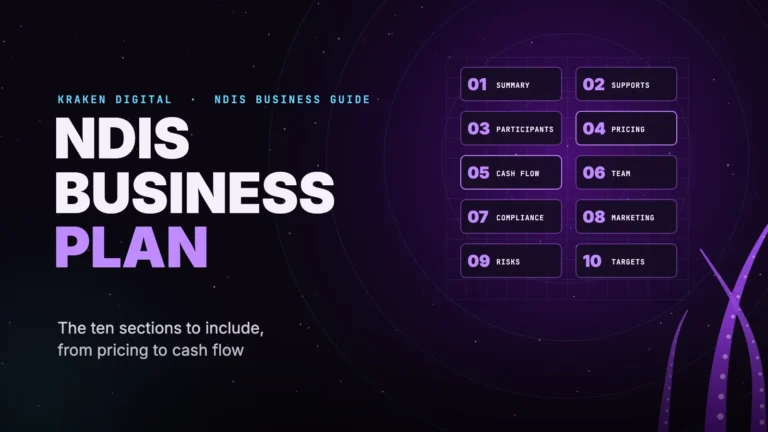
Budget for the rest of your setup too: insurance, client management and rostering software, worker screening, a business plan and your brand and website. Our NDIS business plan guide covers what to cost out.
Before you launch: brand, website and listings
Registration gets you permission to deliver supports. It doesn’t get you participants. Most new providers lose months here, so start this work while your application is with the Commission.
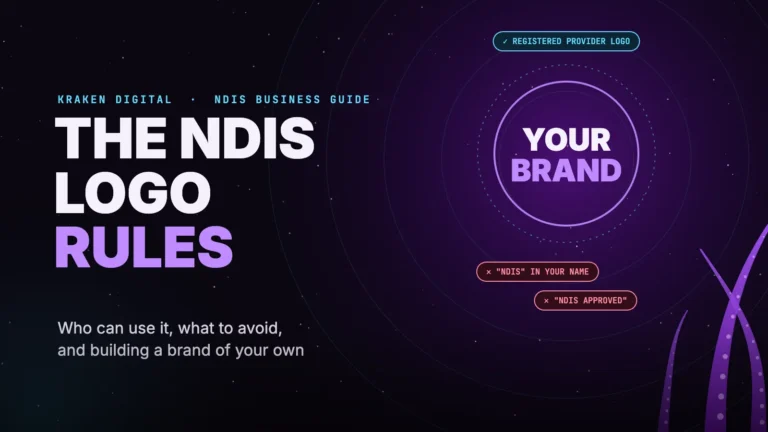
- Pick a name you can keep. The NDIA lists using the NDIS acronym in business, trading or domain names as an example of misleading affiliation. See NDIS logo rules and branding.
- Build a website participants and coordinators can use. Accessible, plain-English and clear about who you support and where. See NDIS web design and what an NDIS website costs.
- Set up a Google Business Profile so you show up in Maps for searches in your area.
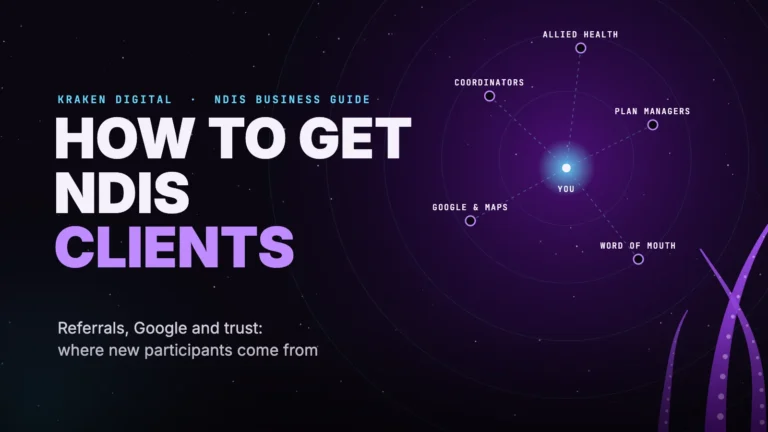
- Plan your referral relationships. Our guide on how to get NDIS clients covers support coordinators, plan managers and more.
Free depth check
Setting up a new NDIS business?
Send us your plans or your current website. We’ll tell you what participants and coordinators will see when they search for you, and what to fix first. No obligation.
How to become an NDIS provider: FAQs
Do I need to be registered to be an NDIS provider?
Not always. Unregistered providers can support self-managed and plan-managed participants for most supports. You must be registered to work with NDIA-managed participants and for certain supports, including supported independent living (SIL) and NDIS digital platforms from 1 July 2026.
How much does NDIS registration cost?
There is no fee to register with the NDIS Commission. You pay an approved quality auditor for your audit, and the price depends on the size of your organisation, the supports you offer and how many participants you support. Get quotes from more than one auditor.
How long does it take to become a registered NDIS provider?
It depends on your size and the complexity of your supports. You have 60 days to complete your application once you start it, and certification audits have a desktop stage followed by an onsite stage within three months.
What is the difference between a verification and certification audit?
A verification audit is a desktop review for lower-risk supports. A certification audit is for higher-risk supports and has a desktop stage and an onsite stage, plus a mid-term audit 18 months into registration.
Can I use NDIS in my business name?
The NDIA says using the NDIS acronym in business names, trading names or domain names is an example of a misleading statement of affiliation. Choose a name that stands on its own.
Sources
- NDIS Commission: Apply for registration
- NDIS Commission: Types of audits
- NDIS Commission: Mandatory registration
- NDIS: How to register as a provider
- NDIS: Logo guidelines
Checked November 2026. NDIS rules change often, so confirm details with the NDIS Commission before you act.
More from the NDIS business guide
This article is one stop in our guide to starting and growing an NDIS business. Keep going:
- StartNDIS business plan: what to include
- StartNDIS logo rules and branding your business
- Get foundWhat an NDIS website costs
- Get foundHow participants find providers online
- Get foundWebsite checklist for care providers
- Win clientsHow to get NDIS clients
- Win clientsNDIS marketing strategy: a five-zone plan
// keep diving