
Strong local visibility is not built by chance. It comes from focused strategy, clean execution, and a clear understanding of how nearby customers search, compare, and choose businesses. Working with local SEO experts such as Kraken Digital can help businesses connect their website, Google Business Profile, content and reviews into one practical growth plan.
For any company that depends on local enquiries, calls, bookings, store visits, or service-area leads, local search is often one of the most valuable digital channels. The challenge is that local SEO is not just “regular SEO with a town name added.” It requires local intent, map visibility, reputation signals, and performance tracking to work together.
What makes local SEO experts different?
Local SEO experts focus on helping businesses appear when customers search for products or services in a specific area. That means they pay close attention to location-based keywords, map results, business listings, review signals, service pages, local content, and the way search engines interpret proximity and relevance. A general SEO team may understand rankings and technical optimisation, but local SEO specialists bring a sharper focus to the moments when a nearby customer is ready to act.
This distinction matters because local searches often carry immediate intent. Someone searching for a restaurant, dentist, plumber, accountant, salon, or home improvement company is usually not browsing casually. They want options they can trust, compare quickly, and contact with confidence.
A strong local SEO strategy often includes:
- Google Business Profile optimisation so business details, categories, services, photos, and updates support visibility.
- Location and service-area pages that explain what the business offers in specific markets without thin or duplicated copy.
- Citation and directory consistency so names, addresses, phone numbers, and website links are accurate across the web.
- Review strategy and reputation management to encourage trust and show active customer engagement.
- On-page SEO improvements that connect keywords, headings, internal links, metadata, and user experience.
- Local content planning that answers practical questions from customers in the target area.
- Performance reporting that turns ranking, traffic, calls, leads, and conversions into clear decisions.
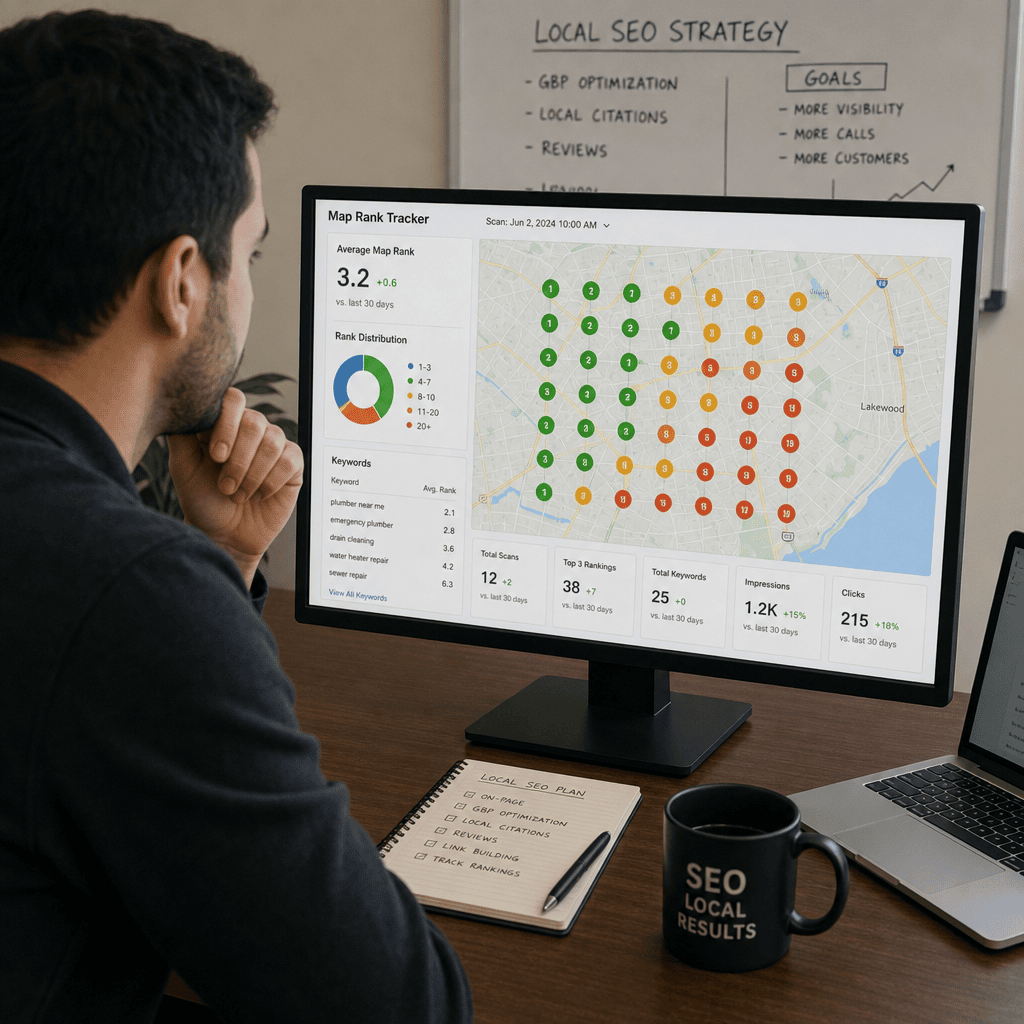
Local search works best when every signal supports the same goal
Search engines look for consistency. If a business website says one thing, directory listings say another, and the Google Business Profile is incomplete, it becomes harder for both search engines and customers to understand the business. Local SEO brings these signals into alignment so the brand feels trustworthy wherever it appears.
This is where an experienced SEO services company can make a meaningful difference. Instead of treating SEO as a set of isolated tasks, the right team builds a connected system. Website structure, keyword targeting, business listings, content, reviews and analytics all support the same objective: helping the right local customers find and choose the business.
Kraken Digital’s positioning as a data-driven, collaborative SEO partner fits this need well. Businesses do not simply need activity; they need clarity. A plan that is tailored to the local market, measured against real outcomes, and adjusted over time is more useful than a generic checklist.
The difference between general SEO and local SEO strategy
General SEO and local SEO share many foundations, including technical site health, keyword research, content quality, link signals, and user experience. The difference is the target. General SEO may aim for broader visibility across regions or topics, while local SEO concentrates on winning attention in specific towns, cities, neighbourhoods, or service areas.
A traditional SEO agency may prioritise organic ranking growth across informational and commercial terms. That can be valuable, especially for ecommerce, publishing, software, or national brands. Local SEO, however, asks a more specific question: how can this business become the most relevant, trusted choice for people nearby?
Here is a simple comparison:
| Focus area | General SEO | Local SEO |
|---|---|---|
| Main goal | Broader organic visibility | Visibility in local search and map results |
| Keyword intent | Informational, commercial, national, or broad | Location-based and service-area intent |
| Core assets | Website content, technical SEO, backlinks | Website, Google Business Profile, citations, reviews |
| Customer journey | Often longer and research-led | Often immediate and action-led |
| Reporting focus | Rankings, traffic, engagement, conversions | Rankings, calls, direction requests, leads, local conversions |
The best approach is not always one or the other. Many growing businesses need both. A local service company, for example, may need strong city pages and map visibility while also publishing helpful content that builds authority across broader search topics.
How can Kraken Digital help maximise local SEO results?
Kraken Digital can help maximise local SEO results by combining search engine optimisation services with measurement and local market insight. Rather than relying on one tactic, a joined-up approach helps each channel strengthen the next. SEO can improve long-term visibility, while content, analytics and reputation activity can reveal which messages and locations are producing the best opportunities.
This is especially useful for businesses that have tried SEO before but felt unsure about what was being done or whether it was working. Clear reporting and collaborative planning can turn SEO from a vague monthly service into a practical business tool.
A tailored plan starts with the local market
No two local markets are exactly alike. A dental clinic in a competitive city centre needs a different plan from a trades business serving several nearby towns. A restaurant may depend heavily on reviews, photos, menus, and map visibility, while a professional service firm may need detailed landing pages and trust-building content.
Good SEO experts look at the business model before choosing tactics. They consider where customers search, what questions they ask, which competitors appear repeatedly, and what proof customers need before making contact. This helps avoid wasted effort on keywords or pages that look attractive but do not support real enquiries.
Analytics keep the strategy honest
Data-driven SEO does not mean drowning a business owner in reports. It means using the right evidence to decide what to improve next. Rankings matter, but they are only part of the picture. A page that attracts traffic but produces no calls may need stronger messaging, clearer calls to action, or better alignment with search intent.
Useful local SEO reporting may include:
- Visibility trends for priority services and locations.
- Website traffic quality, including which pages bring engaged local visitors.
- Lead actions, such as form submissions, phone clicks, booking clicks, or quote requests.
- Google Business Profile interactions, including calls, website clicks, and direction requests where available.
- Review growth and sentiment, especially for businesses where trust is a deciding factor.
- Conversion patterns by location or service, helping the business focus investment where it performs best.
When a SEO service is measured this way, the conversation shifts from “Are we posting blogs?” to “Which actions are helping us win better local customers?”
Practical ways local SEO specialists tailor strategy by business type
A useful local SEO plan should reflect how customers actually choose in that industry. The fundamentals may be similar, but the emphasis changes depending on the business model, purchase urgency, and level of customer trust required.
For home service businesses, local SEO often centres on service-area pages, emergency or high-intent keywords, review strength, and fast contact options. Customers want to know whether the company serves their area, handles their specific issue, and can respond quickly.
For health, wellness, and professional services, trust signals become especially important. The website should clearly explain services, locations, booking steps, practitioner or team information where appropriate, and answers to common concerns. Reviews and local authority can influence whether a visitor feels comfortable making an enquiry.
For retail, hospitality, and venue-based businesses, map visibility, opening hours, photos, menus or product information, and reputation signals may carry more weight. A customer comparing nearby options may make a decision in seconds, so accuracy and presentation matter.
For multi-location businesses, consistency becomes the challenge. Each location needs enough unique information to be useful, while the overall brand must remain coherent. Strong local SEO specialists can create a structure that avoids duplicated, thin pages while still giving each location a clear search presence.
Integrating SEO with paid search and content
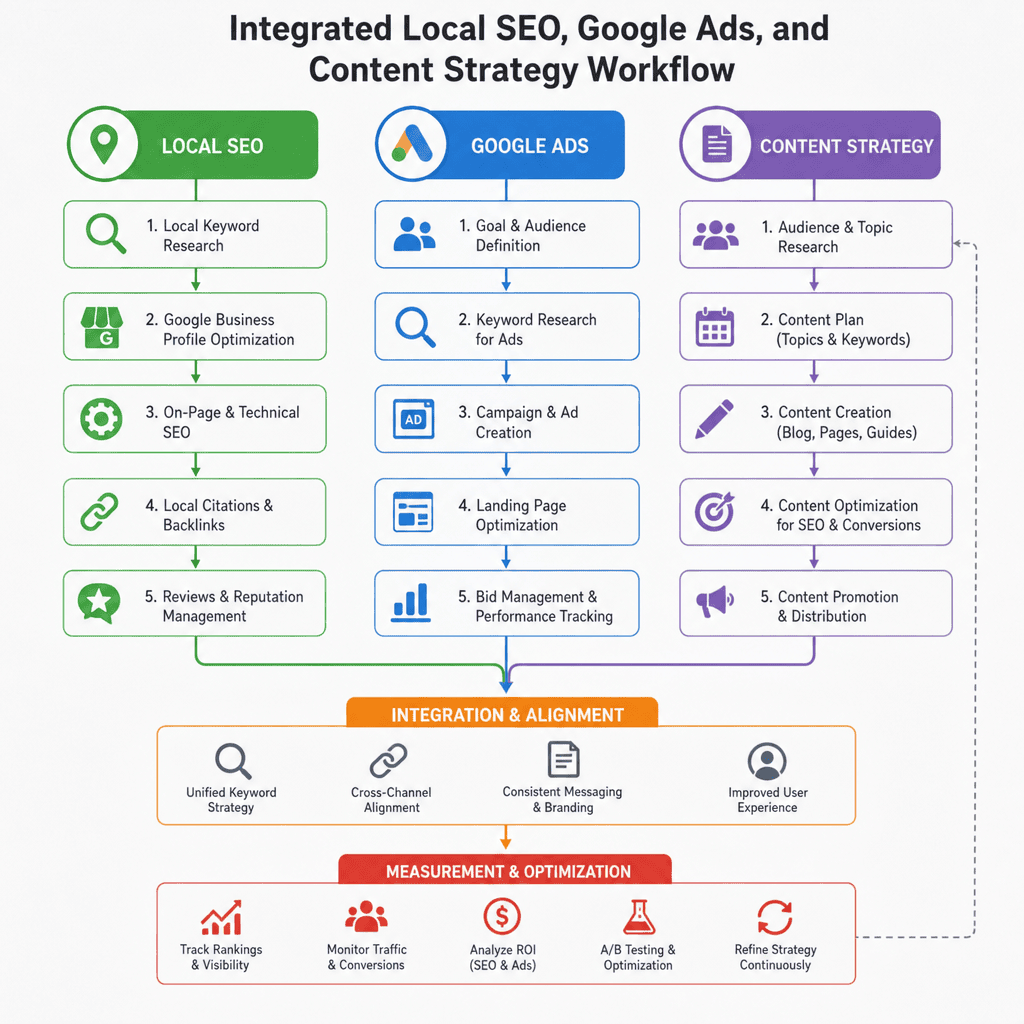
SEO becomes stronger when it is not isolated from the rest of marketing. Paid search can test which services, offers, and locations drive enquiries quickly. SEO can then use those insights to shape landing pages, content priorities, and long-term keyword strategy. At the same time, organic search can reduce dependence on paid traffic over time by building durable visibility.
Content also plays an important role. Local content should not exist just to mention place names. It should help customers make decisions. That might include explaining service options, preparing customers for appointments, comparing common solutions, or answering questions specific to the local area.
A well-integrated campaign may connect:
- Google Ads for immediate visibility and keyword testing.
- Local landing pages for organic search and conversion.
- Helpful blog content to answer early-stage questions.
- Review generation to strengthen credibility.
- Analytics dashboards to show which channels influence leads.
- Ongoing optimisation based on what customers actually do.
This integrated approach is one reason businesses often prefer working with a broader SEO services company rather than juggling disconnected vendors. When SEO, paid media, and analytics speak to each other, decisions become faster and more practical.
What should a business look for before choosing an SEO partner?
A business should look for an SEO partner that understands local search, explains strategy clearly, customises recommendations, and reports on outcomes that matter. The right partner should be able to connect technical work with business goals, not hide behind jargon. If the relationship feels unclear at the start, it is unlikely to become more transparent later.
Before committing, it helps to ask direct questions. A credible team should be comfortable discussing process, priorities, timelines, and how success will be measured without promising unrealistic results.
Use this checklist when assessing potential SEO partners:
- Local experience: Do they understand map results, Google Business Profile optimisation, citations, reviews, and service-area targeting?
- Custom strategy: Do they ask about your margins, locations, customer types, and growth goals before recommending tactics?
- Clear reporting: Will you see what has been done, what changed, and what the next priority is?
- Channel awareness: Can they connect organic SEO with content, paid ads, reputation, and conversion tracking?
- Communication style: Do they explain trade-offs in plain language?
- Sustainable methods: Do they focus on useful content, technical quality, and genuine authority rather than shortcuts?
- Commercial focus: Do they care about enquiries, bookings, calls, and sales, not only rankings?
Choosing an SEO partner is not only a marketing decision. For many local businesses, it affects how consistently new customers discover the company. A transparent, skilled team can help protect the marketing budget from scattered tactics and turn search visibility into a more dependable source of opportunity.
Turning SEO into a practical growth system
Effective SEO is rarely about one dramatic change. It is usually the result of steady improvements made in the right order. Fixing technical issues, improving local pages, refining Google Business Profile content, building citations, encouraging reviews, and publishing helpful content all add weight to the same outcome.
The value of working with Kraken Digital is the ability to approach these pieces as one connected strategy. A business does not need another list of disconnected tasks. It needs a practical plan, clear priorities, and a way to see whether the work is moving the business closer to stronger local visibility and better enquiries.
For companies seeking local customers, the opportunity is clear: show up where people are already searching, provide the information they need, and make the next step easy. With the right local SEO experts and a measured approach, search can become more than a traffic channel. It can become a reliable part of business growth.
Kraken Digital runs local SEO packages for Australian businesses month to month, and for NDIS providers through SEO for NDIS providers. To see where your business stands in local search, request a free SEO audit.